
If there’s one thing this MaastrichtMBA session made clear, leaders who actively manage their own health and wellbeing are better equipped to support their teams. Dr. Sonja Zaar, Assistant Professor of Leadership Development at Maastricht University’s School of Business and Economics, brought her signature blend of academic depth and human interest into the session. Participant Rik van Venrooij, found it particularly interesting. “Sonja has the ability to keep people engaged from start to finish.”
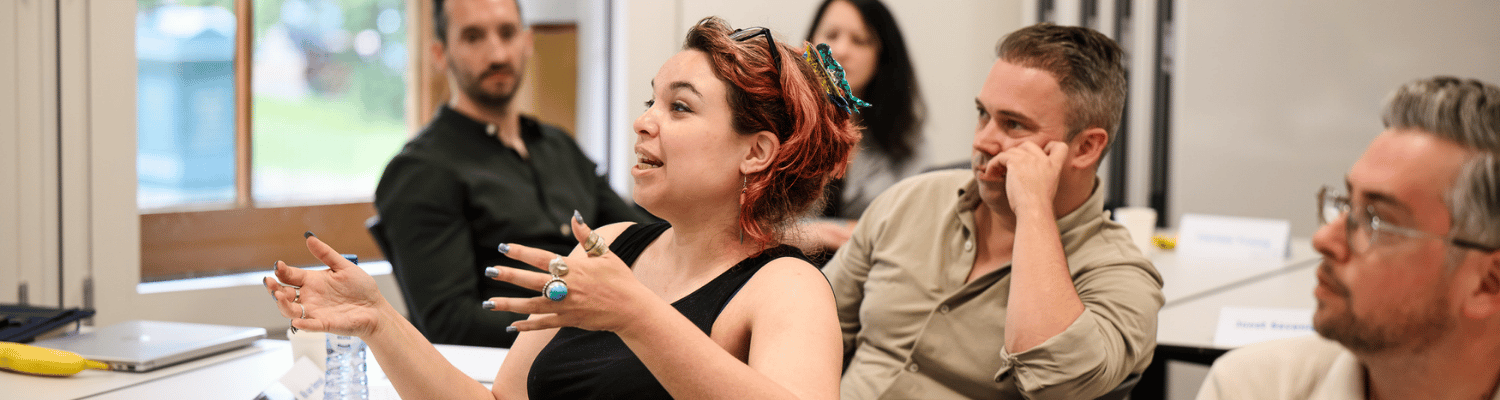
The room was buzzing from the first minute. Zaar kicked off with a fact-or-myth quiz. A lively way to find out what the group actually knew (or assumed) about stress, burnout, and leader health and wellbeing. Student Silvia Havasi: “Sonja was very engaging, very professional in demeanor and very welcoming and kind. I particularly liked the many cues to the class to get the thinking and discourse started. The fact/myth quiz was a great way to engage everyone.”
Dr. Sonja Zaar is Assistant Professor of Leadership Development at the School of Business and Economics at Maastricht University. Drawing on her unique background in oriental communication and culture and Western business administration, she connects different perspectives on leadership, learning, and development in both education and research. Her research focuses on the development of leader identity, with particular attention to the role of schemas, meaning-making, and experiences in this process. Her research interests also include self-regulatory processes, leadership coaching, and leader health and well-being.
Zaar’s session is part of the On-Campus MBA week ‘Managing in Uncertain Times’. One student says that the session fits perfectly in the module. “Managing in uncertain times requires resilience, self-awareness and the ability to sustain performance under pressure. As Sonja made clear: leadership starts with leading yourself. So, the focus on wellbeing added an important human dimension to the broader leadership themes discussed throughout the module.”
Zaar explained the difference between sympathy and empathy. Sympathy means putting yourself in someone else’s shoes for a moment; empathy means actually carrying their worries. Rik van Venrooij: “This was genuinely eye-opening. Carrying other people’s problems is where the risk of burnout is the greatest.” The idea of depleters and energisers ran through the whole session. Zaar’s model breaks self-care down into physical, psychological, relational, and spiritual domains, each with its own drains and its own sources of energy. Havasi will take the exercise home: “I intend to keep doing my identity work, as my depleters outweigh my energisers, keep practising breathwork, walks, sleep, and not taking other people’s baggage onto myself.”
A recurring idea is that stress itself isn’t so bad. In the right dose, it sharpens focus, gives a sense of purpose, and gets you moving. However, chronic, unmanaged stress erodes decision-making and relationships. One participant felt this land directly: “Recognising the impact of stress on decision-making strongly resonated with me. Wellbeing and sustainable performance are highly relevant topics.” The group shared examples of this too, including the observation that a demanding job with a supportive, positive culture can feel far lighter than an ‘easy’ job in a toxic one.
The conversation also turned practical on setting boundaries: the idea of protecting even a short, deliberate stretch of time each day just for yourself, and treating that as non-negotiable rather than the first thing to get sacrificed to a busy schedule. Havasi: “In my opinion too little is known and understood about the significance of this. The cost of poor health and wellbeing is rising and calls for more action from leaders.”
Van Venrooij concludes by saying: “Leadership is almost always about the behaviours and skills needed to be a good leader for others. This part focused on the health of the leader themselves and that’s what makes it such a valuable addition. I have a leadership role myself, so I’ll definitely hold my own leadership style up to the light through the perspectives Sonja offered.”
This article displays the student insights and experiences of our On-Campus MBA Managing in Uncertain Times module. Our On-Campus MBA track is part of the executive modular part-time MaastrichtMBA programme and next to that, we offer also an Online MBA learning format. The programme has a Triple Crown accreditation and is aimed for professionals with at least 5 years of working experience.